
“I hope we can motivate people. I hope people will realize it’s a crisis. It’s 81 in Tucson in mid-December – it should be cold. It was 83 yesterday; every year we’re breaking records. And we had one of the driest years in history in southern Arizona. It’s gonna hit home one of these days – unfortunately, it’s gonna get worse before a lot of people realize what we have done to our planet.” –Art Sanders
In March of 2025, Catherine Rosenberg and Art Sanders started the first Dayenu Circle in Arizona at Kol Ami Synagogue in Tucson. Since then, the Circle has made a real impact on the congregation and larger community.
About three years ago, when two reform congregations in Tucson merged to become Kol Ami (now the largest congregation in southern Arizona), several people were talking about the need for climate action – especially around local issues like recycling and composting.
Art notes, “We looked at various ways that we might incorporate some of these interests among the members of the congregation, and brought it to the Board, which recommended that we become a Dayenu Circle.” The only Circle in Arizona, the group now meets about once a month to take action on the climate crisis.
The need for climate education
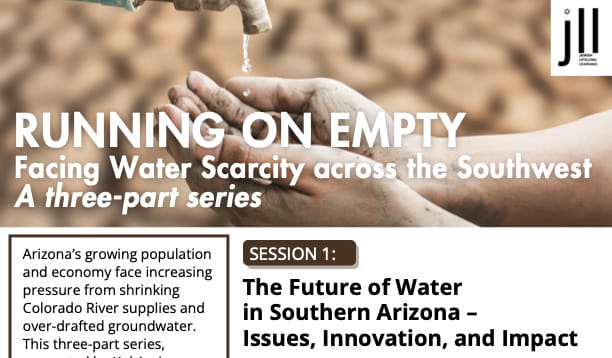
The Circle has made it a priority to educate the congregation and larger community about climate. Starting this month, the Circle is sponsoring a lecture series on the future of water in the Southwest; three lectures at Kol Ami will be open to anyone in the city. [Register for the talks.]
 “We have some excellent speakers,” says Catherine. Sharon B. Megdal is the director of the Water Resources Research Center (WRRC) at the University of Arizona. Michael A. Crimmins, also at the University of Arizona in Tucson, is a professor of climate science and environmental science. “We wanted to have an Indigenous speaker, so we invited Austin Nunez who’s the San Xavier District Chairman of the Tohono O’odham Nation.”
Art says, “Water is a huge problem because the Colorado River is not going to be able to sustain the demand for water in seven states. The states cannot come to an agreement on how to manage the water and the federal government hasn’t been able to help. And now the demand for water has expanded with the data centers that are creeping up all over and using large quantities of our groundwater.”
In addition, they work within the congregation. “We have a very active religious school, and the person in charge of the school is interested in promoting it,” says Catherine. “One young member (who since has gone off to college), was implementing environmental and climate curriculums in the school which has continued”, adds Art.
Catherine goes on, “Art and the head of the education program for the Sunday School are doing a lot to bring environmental issues into the Sunday School. It’s a great way to start reaching out to young people early – so once they’re starting to learn what it means to give back in second or third grade and fifth grade they’re heading in the right direction.”
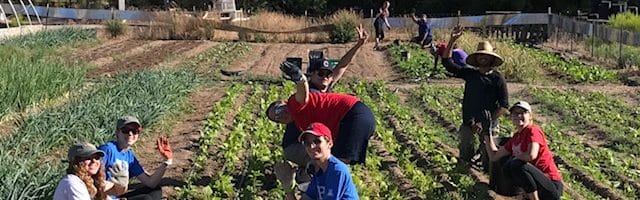
Art cites one student who wanted to plant a vegetable garden for a Bar Mitzvah project as an example of what you could do, and he was able to do so.
Implementing recycling
As soon as the Circle started, it set about taking swift action. “When we started, the congregation had no formal recycling program for congregational events such as seders, onegs and kiddush, and there was a real need for it.”
“In less than a year, recycling has become part of the culture of our synagogue,” says Art. “It used to be that people would ask, why aren’t we recycling? Why are we wasting all those things? And we’re doing educational programs, we’re doing bar mitzvah projects, we’re doing education about the water crisis.”
While the initiative was welcomed by the congregation, a number of Circle members stepped up to do the legwork by getting the appropriate bins, labels, announcements, etc. to make it happen to become part of the culture of the synagogue.
Advocacy work
The Circle has reached out to one Member of Congress who represents Southern Arizona – US Representative Juan Ciscomani – but Ciscomani hasn’t made himself available to meet with congregants who live in his district.
“We put in a lot of work trying to organize a meeting with him, urging him not to dismiss the tax credits for solar and batteries – he had a battery plant in his district, and said he was concerned about climate change. But he voted for the so-called Big Beautiful Bill, and we’ve been trying to hold him accountable – why did you sign on to this and then go ahead and vote for that bill?” says Art.
Another member of the Dayenu Circle is starting to work on a voter registration campaign for the 2026 election cycle.